
Science
Expanding the frontiers of pharmacology
Creating therapeutic opportunities where conventional approaches fall short.
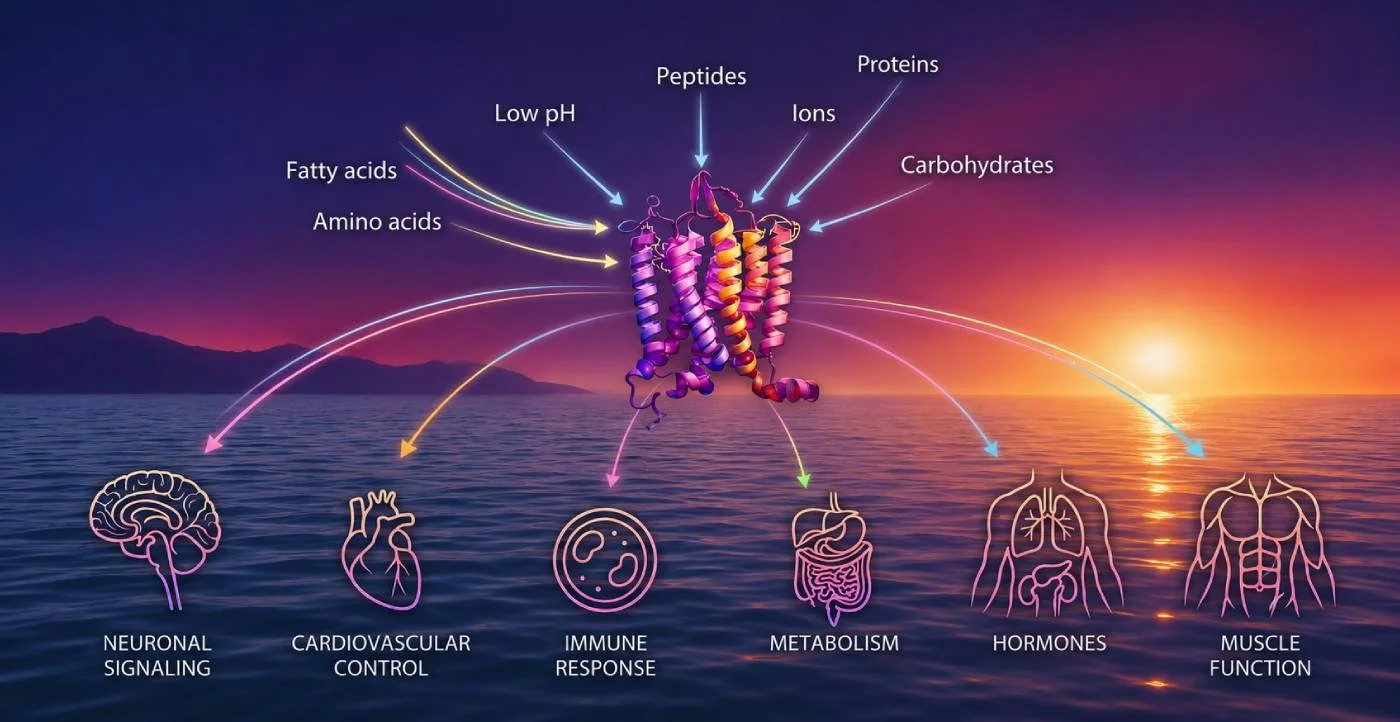
Unco therapeutics specializes in GPCRs, a large family of more than 800 receptors located on the surface of cells throughout the body. These receptors act as molecular microswitches that detect extracellular ligands and convert intracellular signaling responses. They play a central role in regulating all physiological processes including inflammation, immune responses, neuronal activity, hormone signaling, and metabolism. Because GPCRs are naturally designed to interact with specific molecules, they are particularly well suited for drug development and have become one of the most important classes of therapeutic targets. In fact, more than one-third of all approved drugs act by modulating GPCR activity.
GPCRs
The opportunity
Despite this success, lack of efficacy remains a leading cause of failure in clinical trials. Furthermore, only a small fraction of GPCRs have been successfully targeted by existing drugs. Many GPCRs therefore remain either unexplored or difficult to target, and as such, represent a significant opportunity to develop new therapies across a broad range of diseases.
This gap is particularly evident in chronic pain, one of the largest and most underserved markets in medicine that affects hundreds of millions of patients worldwide. Chronic pain is driven by persistent and dysregulated signaling that becomes self-reinforcing, which results in sustained neuronal activation and long-lasting pain even after the initial trigger resolves. As a result, chronic pain remains difficult to treat and is a leading cause of disability globally. Despite its scale, treatment options remain inadequate. Many therapies provide only partial relief, and widely used opioid-based treatments carry significant risks including tolerance, dependence, and serious safety concerns. Non-opioid alternatives frequently lack sufficient efficacy, leaving a substantial portion of patients without effective long-term solutions.

Together, these challenges represent a significant unmet medical need and a major therapeutic opportunity. At their core, they reflect a fundamental limitation of conventional pharmacology as existing therapeutic modalities are not designed to effectively shut down persistent and intracellular signaling that drives chronic pain.

A new approach to GPCR pharmacology
Our pioneer program focuses on developing Allosteric Uncouplers for difficult-to-target GPCRs implicated in chronic pain and inflammation. These compounds are designed to selectively block overactive receptors that sustain pathological signaling not only at the cell surface, but also from intracellular compartments hidden deep within the cell. The major objective is to deliver safe and effective non-opioid therapies for conditions with significant unmet medical need and where pain plays a central role, including arthritis, migraine, inflammatory bowel disease, and cancer.
An integrated drug discovery engine
Our R&D platform combines state-of-the-art technologies across structural biology, AI-driven in silico screening, medicinal chemistry, and translational pharmacology. This integrated approach, combined with our highly tailored design strategies, enables the development of molecules that precisely and selectively modulate even the most difficult-to-target GPCRs.